

Explore further
A Tribute to Séverin Blanchet, by Régis Koetschet
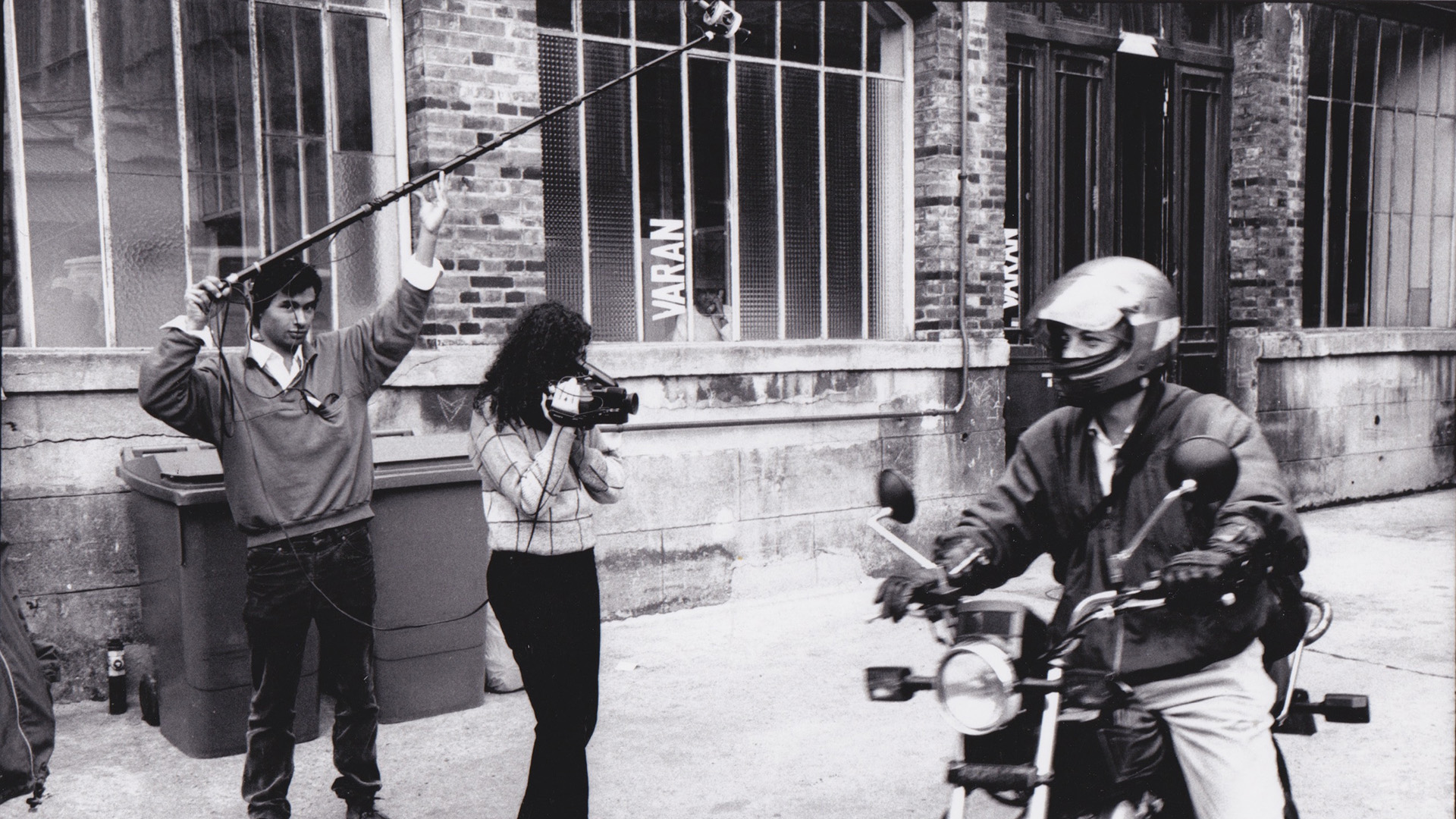
On February 26, 2010, Séverin Blanchet, a filmmaker and instructor, was killed in an attack in Kabul as he was preparing to lead a new workshop in Afghanistan.
On February 26, 2020, during a tribute at the Ateliers Varan, Régis Koetschet, a friend of Séverin Blanchet, wrote this text. We would like to share it with you.
Dear friends,
Ten years to the day.
Séverin had arrived in Kabul the day before to lead a new training session for Afghan documentary filmmakers.
He had rediscovered that slightly chaotic Afghan atmosphere he loved — the eagerness of young people to watch and listen, then to film; but also to decipher an identity within a maze of dead ends and taboos, of aspirations and dreams.
Séverin could see how far he had come since he had embarked on this adventure a few years earlier.
There had been some wonderful moments. I remember that October 12, 2006. The French Cultural Center was packed to the brim for the screening of a dozen short films shot over the summer — a mental health facility where women with intellectual disabilities dance, a taxi driver recounting his wars to his passengers, an electrician navigating the tangled streets of a working-class neighborhood, a bicycle repairman… films that captured the lives of ordinary men and women, many of which would go on to win awards.
But there had also been moments of doubt in this Afghanistan ravaged by its demons.
In the early morning, terrorist violence cruelly took Séverin away from his loved ones, his friends, and his Afghan trainees. And here we are tonight, alone with his memory and his images.
An exhibition is still on view for a few more days at the Mucem in Marseille. Its title is powerful and thought-provoking: “Afghanistan at the Risk of Art.” It reminds us of a context in which confrontation, destruction, and creation collide. Afghanistan at the risk of art; art at the risk of violence and, at times, death.
The exhibition catalog, written by its two curators, Guilda Chahverdi and Agnès Devictor, mentions in its introduction, under the beautiful title “The Breath of Artists,” the work of Séverin Blanchet and the Ateliers Varan alongside a generation that, to quote, “defies religious constraints, traditions, and social norms; explores visual and auditory forms; and seeks ways to give voice to individual or collective tragedy.”
I can still hear Séverin’s voice; for him, the documentary, in the context of overcoming a crisis, aimed to rebuild the social fabric and reclaim a shared history. He invited us to look and to connect. He instilled confidence.
These days, there is talk of the signing of a political agreement with the Taliban. I realize how incomprehensible and abhorrent this may seem. All those innocent victims, all that suffering, just to end up here.
I would like to say that Séverin’s sacrifice holds great power. This agreement between the United States and the Taliban will usher in a new phase of intra-Afghan dialogue. It will be bitter and will touch on what matters most: values, human rights, freedoms, and cultural practices.
In this debate, those who advocate for an Afghanistan where women are equal to men, where schools are open to all, and where the right to create is absolute, must remain strong and know they are not alone. There is no doubt that the memory of Séverin, Farkhunda, and so many others will give strength and courage to the negotiators.
We miss Séverin Blanchet; I miss Séverin Blanchet.
As a former ambassador to Kabul, I had the opportunity to express how much the training provided by the Ateliers Varan had enriched my mission and how it had, with sensitivity and intelligence, shaped the role we wished to play in support of reconstruction and dialogue. As France and Afghanistan prepare to celebrate a century of relations, I am delighted that Séverin is among the key figures in this history.
As a citizen, I am alarmed by the violence, the lies, the contempt, and sometimes the hatred that plague our world, from the conduct of international affairs to the practice of intellectual debate. Do new information technologies inevitably lead to the manipulation of facts and narratives, memories, and images? The entire mission of the Ateliers Varan affirms the opposite, and we are also here tonight to support this commitment.
In my personal Pantheon, I like to bring together two figures who were deeply concerned about these forms of obscurantism and totalitarianism and who, each in their own way, upheld the values of respect and humanism to the very end, exploring paths toward an Afghanistan of tolerance and enlightenment. They are the poet-philosopher Bahodine Majrouh and Séverin Blanchet.
We must revisit "Ego-Monstre", Bahodine Majrouh’s magnum opus. Everything in it is relevant to our present day.
Friend, the Traveler, no one here has the right to utter its name. Know, however, that this city is Tyrannopolis: forbidden speech, a reality trampled upon, lies elevated to the status of faith — such are the first walls that border its space. Nothing of spontaneous speech must remain. Only the new language matters, the one that masks itself, the one that veils and re-veils everything, so that the lie is decreed truth and error, accuracy.
I am working on a text about André and Clara Malraux’s trip to Afghanistan in 1930. The memory of Bahodine and Séverin is inspiring. It will find its place in the prologue.
Malraux will not return to Afghanistan. Yet a mark remains in the steppe, for both his novel “Les Noyers de l’Altenburg” and his writings on art are rooted in that cultural attachment to which I am deeply committed and which some will carry to the point of sacrifice.
I do not recall ever discussing Malraux with Bahodine or with Séverin, but it is clear that for these two friends, art was a conquest and commitment a destiny.
Bahodine was assassinated on February 11, 1988, in Peshawar; Séverin was killed on February 26, 2010, in Kabul in a terrorist attack.
I wished to dedicate this work to their memory.
Here are a few more lines from Majrouh on Ghazni, where Malraux would travel and where the Sufi poet Sana’i is buried. In them, he evokes the eternal rest of those they call the “architects of humanity.”
But in truth, nothing disturbs the rest of the architects. In the still soil of death. The wise weave the fabric of life’s ever-changing sky. The children of this soil, the children of beauty and truth, will indeed triumph over the armies of hell. Go, return to your exile, and tell my sons: here, in the still soil of death, the wise men of this land weave the fabric of a sky where only birds cry out.
Régis Koetschet
Ask Us
Questions about our training courses? Please contact us 01 43 56 64 04
6, impasse de Mont Louis
75011 Paris